Somewhere around the return-to-office push of the last few years, snacks became the default answer to “how do we make the office worth coming into.” Free granola bars, a cold brew tap, maybe a cereal wall if the budget allowed it. It worked, mostly, but it also meant every office started to look the same, and the easy win got claimed fast enough that it stopped being a differentiator.
The pantry got solved. The beverage side mostly didn’t.
Most offices still run on a drip coffee machine, a Keurig, and a mini fridge of La Croix, which was a fine baseline in 2015 and now reads as the minimum rather than a perk. Meanwhile the actual beverage habits of employees have shifted hard toward specialty drinks, cold brew, protein shakes, energy drinks, flavored sparkling water, none of which a Keurig or a case of seltzer covers particularly well.
I’d argue this matters more than another snack refresh
A snack is something someone grabs on the way past. A drink is something people build a small ritual around, the 10am coffee run, the afternoon energy drink, the thing that gets someone up from their desk and talking to a coworker for five minutes. An office that gets that ritual right is doing more for the in-office experience than another basket of granola bars, and it’s a cheaper line item than most people assume once you compare it to what a coffee shop habit actually costs an employee weekly.
Why most facilities teams skip it anyway
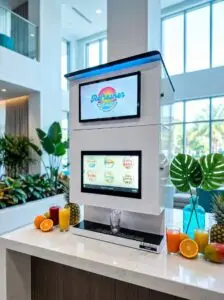
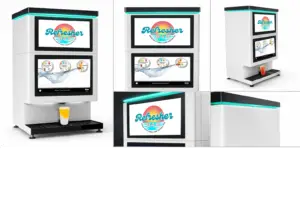
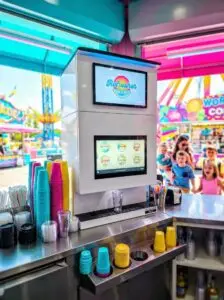
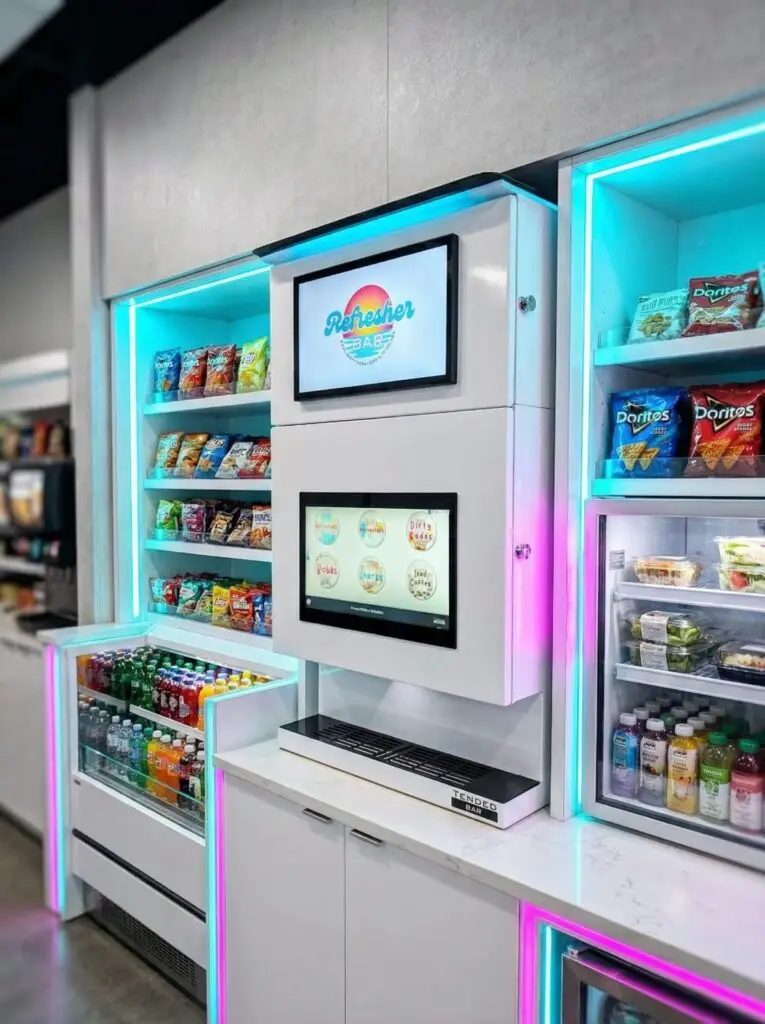
The honest reason is that a real beverage program sounds like hiring a barista, and no office wants to manage that. But that’s a false choice. A compact, self-serve station that pours consistent specialty drinks doesn’t need a dedicated staff member any more than the existing coffee machine does, it just does more with the same footprint and the same lack of a labor line item.
Where this fits for a real office
A breakroom or a micro-market setup is the natural home for this, not a full café buildout, something that lives next to (or replaces) the existing coffee station and gets restocked by whoever already handles the pantry. The offices that get ahead of this aren’t spending more, they’re spending the same budget on something employees actually notice instead of another variation on free chips.