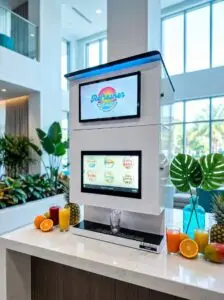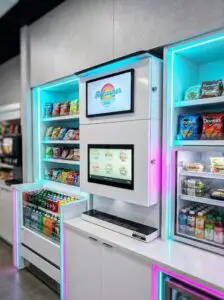
Short answer: QSRs and cafes need beverage speed that matches drive-thru and counter-service pace
Quick-service restaurants and cafes run on tight ticket-time expectations, especially at the drive-thru window or counter during a morning or lunch rush. A countertop automated system pours a drink in as little as 5 seconds under standard conditions, which helps keep beverage prep from becoming the bottleneck in an already fast-paced service model.
Where QSRs and cafes deploy automated beverage systems
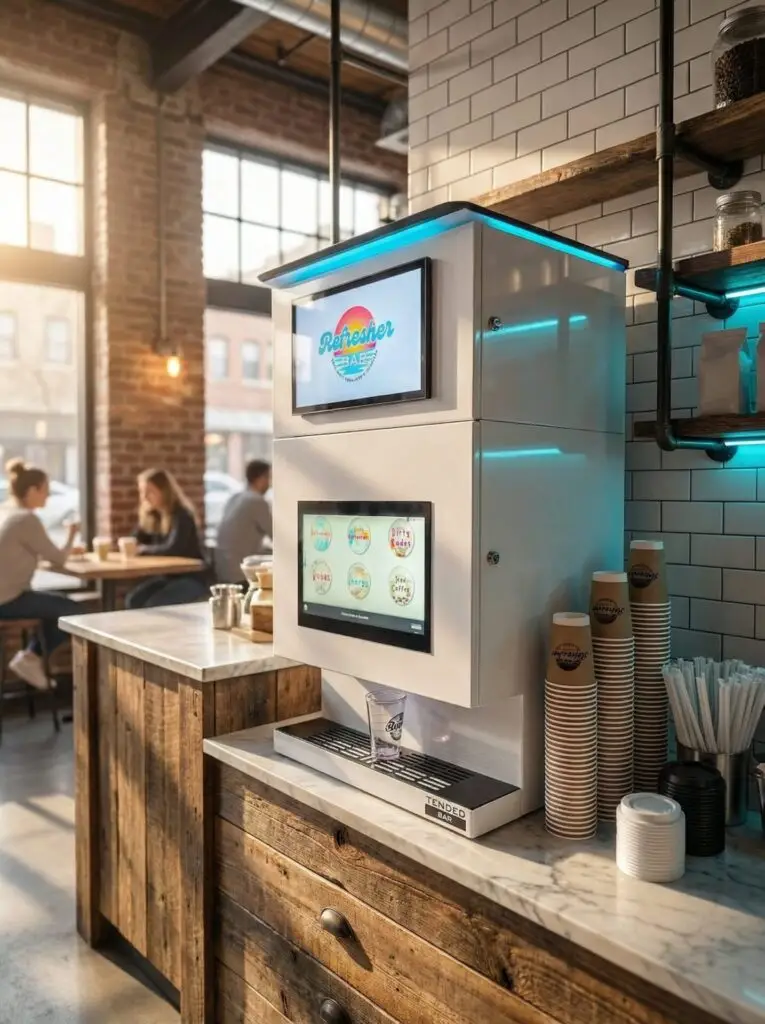
Common placement points include the beverage station behind the front counter, a drive-thru prep area, and self-serve stations in dine-in seating areas. Cafes in particular often add automation to handle iced coffee and tea builds that would otherwise require a dedicated staff member during peak hours.
Menu fit for QSR and cafe programs
Iced coffee, teas, refreshers, lemonades, and dirty sodas are common categories for this segment, typically built from BIB syrups, bulk liquid bases, and water or carbonation, and they tend to be a natural fit for automation because they’re recipe-driven and don’t usually involve dairy or heat. Dairy add-ins and other perishables raise separate food-safety and cleaning questions that should be confirmed with TendedBar before adding them to a menu.
Speed and consistency under ticket-time pressure
QSR and cafe brands live and die by consistency, the drink has to taste the same at 7 a.m. and 2 p.m., made by whichever team member is on shift. Automation removes recipe variance from the beverage side of the ticket, which can help hold quality steady during a rush when a rushed employee might otherwise cut corners on a manual build.
Space and installation for counter and drive-thru layouts
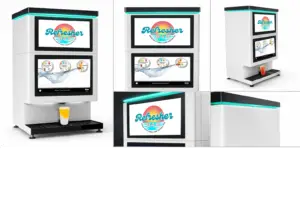
QSR and cafe footprints are often tightly built around existing counter and drive-thru equipment, so knowing your exact dimensions matters. The countertop configuration runs roughly 30 in W x 25.5 in D and draws on a standard 20-amp, 110V circuit in most applications, which generally fits within an existing beverage-station footprint. Confirm exact utility requirements with a licensed electrician before finalizing placement, especially in retrofits of older locations.
Staffing considerations for high-volume, low-price-point service
QSR and cafe margins per drink are typically thin, which makes labor efficiency important. A single well-configured system can generate the throughput that would otherwise take additional staff hours to match during a rush, a useful directional input, though the actual labor impact depends on your specific store’s volume and crew structure.
Questions to work through before installing at a QSR or cafe
- Where does beverage prep currently slow down your ticket times, counter, drive-thru, or both?
- Which menu items are BIB- or bulk-friendly, and which need separate confirmation (dairy or heat-based drinks)?
- What’s your existing counter or drive-thru footprint, and does it accommodate the countertop unit’s dimensions?
- Do you need POS integration to keep ticket flow synced with your existing system?
- What’s your restocking and cleaning plan across your operating hours?
Frequently Asked Questions
Can automation speed up drive-thru beverage service?
Yes, a countertop unit placed in the drive-thru prep area pours a drink in as little as 5 seconds under standard conditions, which can help keep beverage builds from slowing down ticket times during a rush.
What drinks work well for QSR and cafe automation?
Iced coffee, iced tea, refreshers, lemonades, and dirty sodas are common fits since they’re typically built from BIB syrups and bulk liquid bases. Dairy add-ins need separate confirmation before adding them to a menu.
How much counter space does a QSR beverage station need?
The countertop configuration measures roughly 30 in W x 25.5 in D on a standard 20-amp, 110V circuit in most applications. Confirm exact requirements for your specific counter or drive-thru layout with a licensed electrician.
Does automation help with consistency across shifts?
Yes, automated recipe execution removes drink-to-drink variance that can happen when a rushed team member builds a drink by hand, helping keep quality consistent across shifts and staff.