Short answer: automated and batched cocktails solve different problems, and many venues use both
Batched cocktails are pre-mixed in bulk ahead of service, fast to pour but fixed once mixed. Automated dispensing builds each drink from individual BIB and bulk ingredient inputs at the point of service, which allows recipe changes and menu variety without re-batching, at a pour time as fast as 5 seconds per drink on the countertop configuration. Neither approach is universally better, the right fit depends on your menu size, volume pattern, and how often your recipes change.
How batched cocktails work
Batching means mixing a cocktail recipe in bulk before service, then pouring from that pre-mixed batch throughout a shift or event. This is fast at the point of pour and requires minimal equipment, but the recipe is fixed once batched, and unsold batch typically can’t be repurposed into a different drink.
How automated dispensing works
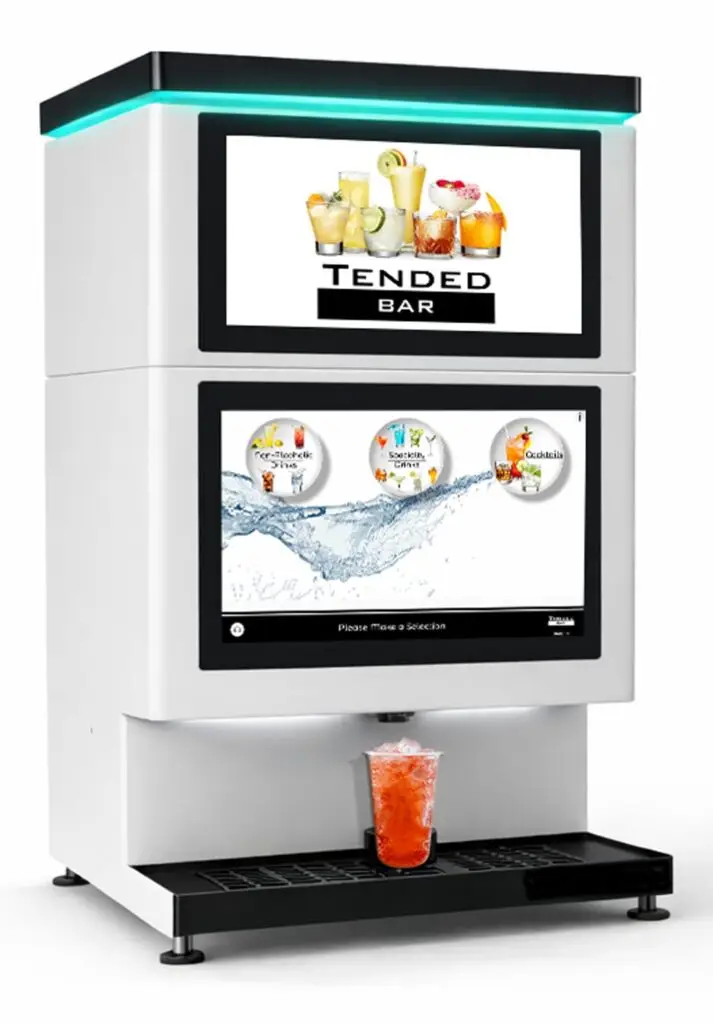
An automated system builds each drink at the point of service from individual ingredient inputs, up to 16 BIB and 10 bulk inputs on the countertop configuration, plus separate water and soda lines. This supports menu variety from a shared ingredient set and allows recipe adjustments without re-batching, since nothing is pre-mixed ahead of time.
When batching makes sense
Batching tends to fit high-volume service of a small, fixed cocktail menu, where the same one or two drinks will sell in predictable volume and recipe consistency across a large batch matters more than menu flexibility.
When automated dispensing makes sense
Automated dispensing tends to fit venues wanting broader menu variety, frequent recipe or seasonal changes, or unpredictable demand across many different drinks, since ingredients aren’t committed to a fixed recipe until the moment of pour.
Using both approaches together
TendedBar generally recommends against combining batching with automated dispensing for the same menu, since every automated pour is already mixed fresh in the glass at the point of service, which removes most of the reason to pre-batch. The one common exception is a Tap Wall configuration, where batching fits the format and can make sense alongside or instead of individual automated pours.
Questions to work through when comparing approaches
- How many distinct cocktails do you need on your menu, and how often does that menu change?
- What’s your expected volume pattern, steady demand for a few drinks, or variable demand across many?
- Do you need the flexibility to adjust recipes without re-batching?
- Does your venue include a Tap Wall format, where batching still makes sense alongside automated dispensing?
Frequently Asked Questions
Is automated dispensing faster than batched cocktails?
Batched cocktails can pour very quickly since they’re already mixed. Automated dispensing pours a full drink in as little as 5 seconds under standard conditions, while also building it from individual ingredients at the point of service.
Can a venue use both batching and automated dispensing?
Combining the two isn’t usually necessary, since every automated pour is already mixed fresh in the glass at the point of service. The main exception is a Tap Wall configuration, where batching fits the format and can make sense alongside automated dispensing.
Which approach offers more menu flexibility?
Automated dispensing generally offers more flexibility since drinks are built from individual ingredients at the point of service rather than pre-mixed in a fixed batch.
Which approach is simpler to operate?
Batching requires less equipment and can be simpler for a small, fixed menu. Automated dispensing requires more setup but supports a wider menu from a shared ingredient set.