
Nightclubs and comedy clubs end up in the same conversation about bar automation more often than you’d expect, mostly because both are late-night, ticketed, drink-driven venues. But anyone who has worked both knows they don’t have much in common once the doors open, and that difference matters more than the venue type itself.
A nightclub’s problem is a wall, not a spike
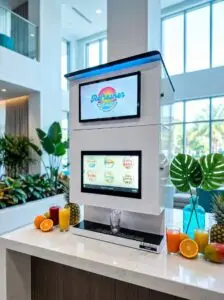
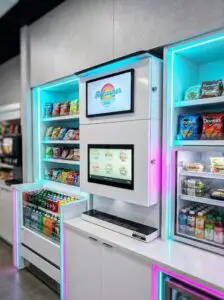
A nightclub bar doesn’t really have a rush hour, it has a rush that starts around 11pm and doesn’t let up until close. The bar needs to sustain high volume for three or four hours straight, which is a staffing and stamina problem as much as a speed problem. An automated station here works as a pressure release valve, giving guests a fast lane for straightforward pours (the vodka sodas and rum and cokes) so bartenders can stay focused on the drinks that actually need a human, the craft cocktails people are willing to wait for.
A comedy club’s problem is a two-drink-minimum sprint
Comedy clubs run on a completely different clock. Most enforce a drink minimum, and most of that ordering happens in the ten minutes before the show starts and again during the single intermission, if there is one, then nothing until the next seating. It’s a sprint followed by dead air, repeated two or three times a night. An automated unit here solves a different problem than at a nightclub: it’s about clearing the pre-show line fast enough that the room is actually seated and quiet when the comedian walks out.
Same equipment, different job
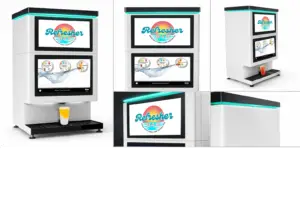
This is really the point: the hardware doesn’t care whether it’s pouring for a sustained wall of demand or a five-minute sprint, but how a venue configures and staffs around it should. A nightclub benefits more from parallel stations spread around the room. A comedy club benefits more from a single fast station right at the point where the line already forms, since the goal is clearing that queue before showtime, not distributing volume across the night.
What doesn’t change either way
ID checks, over-service judgment calls, and local alcohol licensing rules apply exactly the same whether the pour comes from a bartender’s hand or an automated line, and both venue types need staff present who are trained on those calls regardless of how the drink physically gets made. Automation changes the mechanics of pouring, not who’s responsible for the room.