Short answer: the site must support the complete beverage pathway
A successful install depends on more than counter space. The site needs to support power, water and drainage where applicable, CO2 and ingredient storage, cooling, and, increasingly, network connectivity for monitoring or POS integration. Most TendedBar countertop applications run on a standard 20-amp, 110V circuit, but full system electrical, plumbing, and gas requirements vary by configuration and should always be confirmed before installation, not assumed from a general guide like this one.
Counter, floor, and service-area requirements
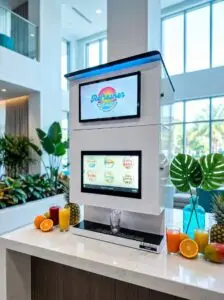
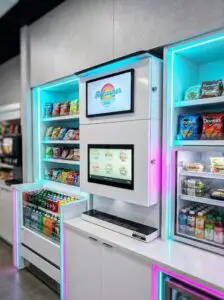
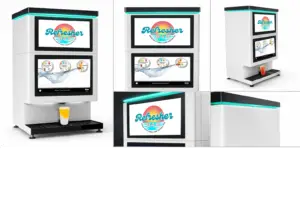
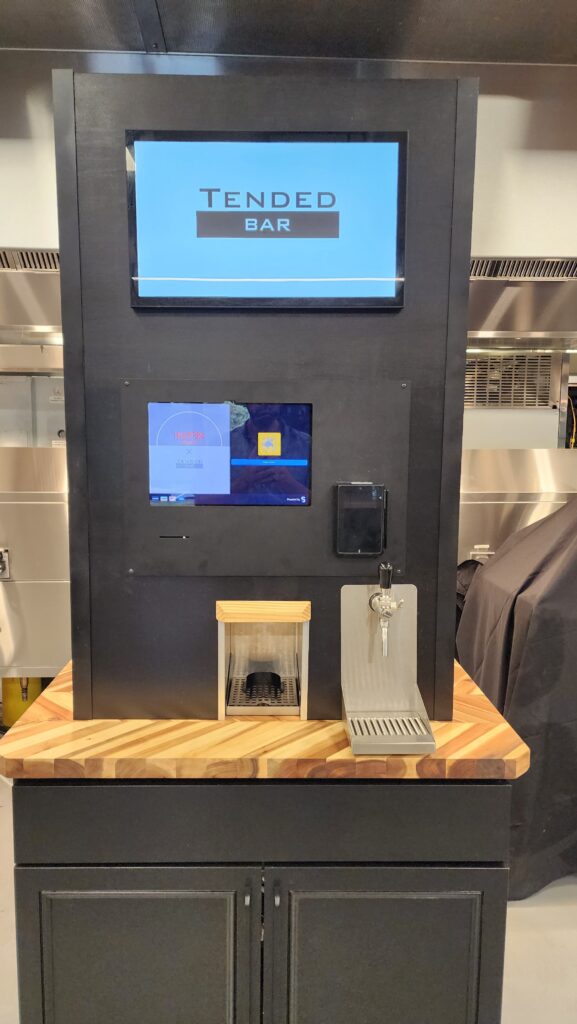
Start with the physical space: available counter or floor area, plus room for ingredient storage, technician service access, and guest or staff handoff. TendedBar’s countertop configuration runs roughly 30 in W x 25.5 in D, but that’s the cabinet alone. The full service area needs more room than the cabinet footprint suggests.
Power requirements by configuration
Most TendedBar countertop applications draw on a standard 20-amp, 110V circuit. Full system electrical requirements should always be confirmed with a licensed electrician before you commit to a location, since requirements vary by configuration and shouldn’t be inferred from a single component’s spec sheet.
Dedicated circuit questions
Confirm whether your configuration requires a dedicated circuit, and whether it can share power with other kitchen or bar equipment. This is a question for your electrician and your TendedBar contact together, not something to assume from a general guide.
Cold-plate versus chiller implications
Cooling method affects both power draw and space requirements. [CONFIRM: current cooling configuration options and their specific power and space implications before publishing comparative guidance.]
Water, drainage, filtration, and backflow questions
Some configurations need a water line and drain; others don’t. There’s no universal plumbing requirement across all TendedBar configurations, so confirm water, drainage, filtration, and backflow prevention needs for your specific setup before finalizing your installation site.
CO2, compressed air, and ingredient storage
Confirm whether your configuration needs CO2 or compressed air, and plan storage space for BIB boxes, bulk containers, and CO2 tanks near the unit. This storage is separate from the unit’s own footprint and needs to be part of your site plan from the start.
Cooling, ice, cups, and handoff
Beyond the dispenser’s own cooling needs, plan for where ice, cups, and lids are staged and where the finished drink is handed off. These operational details affect layout as much as the equipment itself does.
Network, payment, and integration readiness
If you’re planning remote monitoring, POS integration, or cashless payment, confirm network requirements and which integrations are currently supported for your configuration. Don’t assume a system connects with every POS platform without confirming compatibility directly with TendedBar.
Cleaning, restock, maintenance, and escalation ownership
Before installation, confirm the cleaning cycle and schedule, who restocks BIB, bulk, and CO2 supplies, what staff training is provided, and how service and support requests get handled. A site that’s technically ready but has no clear operational ownership tends to underperform regardless of how well the physical install went.
Information to gather before a TendedBar site assessment
- Available counter or floor space and existing utility locations
- Current electrical service at the install location
- Whether water, drainage, and CO2 or compressed air are already available
- Planned ingredient storage location and capacity
- Network connectivity plans, including any POS or payment integration goals
- Who will own cleaning, restocking, and maintenance once the system is live
Final drawings and local requirements control
This article is a planning starting point, not a substitute for final product drawings, manufacturer instructions, and the requirements of your local authority having jurisdiction. Confirm all specific technical requirements with TendedBar and your licensed contractors before finalizing an installation.
Frequently Asked Questions
Does a countertop beverage dispenser need plumbing?
Some configurations need a water line and drain; others don’t. Confirm this for your specific system and menu before finalizing your installation site.
What electrical service does an automated beverage system require?
Most TendedBar countertop applications need a standard 20-amp, 110V circuit, though full system requirements vary by configuration and should be confirmed with a licensed electrician before installation.
Does the system need CO2 or compressed air?
That depends on your specific configuration and menu. Confirm CO2 and compressed air needs directly with TendedBar as part of your site assessment.
Where are BIB and bulk ingredients stored?
Typically near the unit, either in a cabinet base or an adjacent storage area, depending on the installation. Plan this storage into your layout from the start.
Does the equipment need internet access?
If you’re planning remote monitoring, POS integration, or cashless payment, yes. Confirm the specific network requirements and supported integrations for your configuration with TendedBar.
Who should participate in a beverage-system site survey?
Facilities, construction, operations, IT, and whoever will handle beverage technician duties should all be involved, since utility, network, and operational ownership questions cut across all of these roles.