Short answer: BIB and bulk inputs solve different beverage-program needs
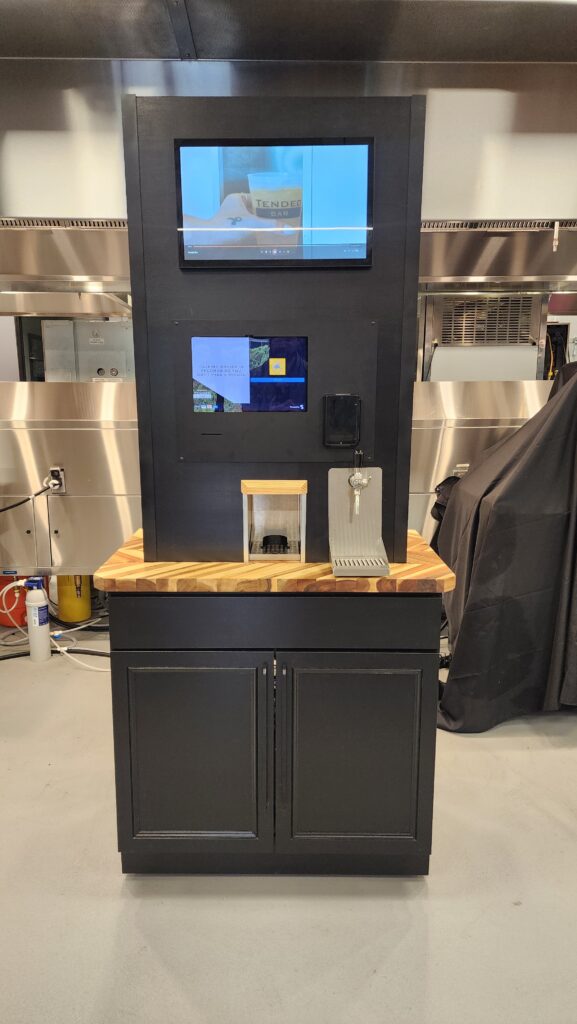
Bag-in-box (BIB) and bulk liquid inputs are two different ways of feeding ingredients into an automated beverage system, and most flexible menus end up using a mix of both rather than relying on just one. TendedBar’s countertop configuration supports up to 16 BIB and 10 bulk inputs, which gives operators room to combine concentrated syrups with larger-volume liquid ingredients on the same system. Understanding the difference helps you plan storage, procurement, and cleaning around the architecture you actually have, rather than assuming every ingredient works the same way.
What is a bag-in-box beverage ingredient?
A bag-in-box ingredient is a concentrate or syrup packaged in a flexible bag inside a cardboard box, connected to the system through a dedicated line and pump.
Package, connector, pump, and line
Each BIB input typically has its own connector, pump, and line running from the box to the dispensing head, which keeps ingredients separated and lets the system dose small, precise amounts per drink.
Common operating advantages
BIB packaging is generally compact, easy to swap out, and well suited to concentrated ingredients where a little goes a long way. Because each box is a sealed unit, changeover is usually straightforward.
Common limitations
BIB inputs work best for concentrates and syrups rather than high-volume base liquids, and the number of BIB lines a configuration supports sets a hard limit on how many distinct BIB ingredients you can run at once.
What is a bulk beverage input?
A bulk input draws from a larger container, typically used for ingredients consumed in higher volume than a BIB line is designed for.
Container and draw pathway
Bulk ingredients are usually stored in a larger container near the unit and drawn through a dedicated line, similar in principle to a BIB setup but sized for higher-volume use.
Recipe flexibility
Because bulk inputs handle higher-volume ingredients, they’re often used for bases that show up across many recipes, which can reduce how often you need to restock relative to serving volume.
Handling and cleaning considerations
Bulk containers may need different handling, refilling, and cleaning procedures than sealed BIB boxes. [CONFIRM: approved cleaning cadence and handling guidance for bulk inputs before publishing specific procedures.]
BIB vs bulk: comparison by menu, storage, labor, and sanitation
BIB inputs tend to fit concentrated, lower-volume ingredients and offer simple, sealed-unit changeover. Bulk inputs tend to fit higher-volume base ingredients and may involve more manual handling during refill and cleaning. Storage needs differ too: BIB boxes are typically compact and stackable, while bulk containers may need more dedicated space. Which mix is right for your program depends on your specific recipes and volume, not a fixed rule.
How mixed input architectures expand a menu
Using both BIB and bulk inputs together lets a single system support a broader menu than either input type alone. TendedBar’s countertop configuration, with up to 16 BIB and 10 bulk inputs, is built around this mixed approach so operators can combine concentrated syrups with higher-volume bases on one platform.
Ingredient compatibility is more than viscosity
Whether an ingredient works well through either input type depends on more than how thick it is.
Temperature and shelf life
[CONFIRM: approved temperature and shelf-life guidance for specific ingredient categories before publishing specific claims.]
Dairy and allergens
Dairy and allergen-containing ingredients raise food-safety and cross-contact questions that need to be confirmed for your specific configuration and cleaning process. [CONFIRM: approved dairy and allergen handling guidance before publishing specific compatibility claims.]
Carbonation and dilution
Carbonated ingredients and ingredients that need precise dilution have their own handling requirements separate from general BIB or bulk compatibility. Confirm these details for any new ingredient before adding it to a menu.
Tubing, seals, and cleaning chemistry
Some ingredients may not be compatible with standard tubing, seals, or cleaning chemicals. Check ingredient compatibility with your system’s components before running anything untested through the line.
Calibration, changeover, and traceability
Recipes depend on accurate dosing, so calibration matters whether an ingredient comes from a BIB line or a bulk input. When you change out an ingredient, confirm the new product is calibrated correctly before it goes into service, and keep records of what’s running through each line for traceability and troubleshooting.
Where TendedBar’s BIB and bulk architecture fits
TendedBar’s countertop configuration supports up to 16 BIB and 10 bulk ingredient inputs, giving operators a mixed architecture that can cover concentrated syrups and higher-volume bases on a single system. The right mix of BIB and bulk for your specific menu is worth working through with TendedBar directly rather than assuming a generic split.
Questions to ask ingredient and equipment suppliers
- How many BIB and bulk inputs does your specific configuration support?
- Which of your planned ingredients are confirmed compatible with the system’s tubing, seals, and cleaning chemistry?
- What’s the recommended cleaning and changeover process for each input type?
- Does your menu include dairy, allergens, or other ingredients that need separate compatibility confirmation?
- How is calibration handled when an ingredient or supplier changes?
- What traceability or logging is available for ingredient changeovers?
Frequently Asked Questions
What does BIB mean in beverage dispensing?
BIB stands for bag-in-box, a packaging format where a concentrate or syrup is sealed in a flexible bag inside a box and connected to the system through a dedicated line and pump.
What is the difference between BIB syrup and a bulk liquid ingredient?
BIB inputs are typically used for concentrated syrups in a sealed, easy-changeover package, while bulk inputs are used for higher-volume base ingredients drawn from a larger container.
Can one beverage system use both BIB and bulk ingredients?
Yes. TendedBar’s countertop configuration supports up to 16 BIB and 10 bulk inputs on the same system, which is what allows a mixed architecture to expand menu options.
How many BIB and bulk inputs can a commercial system support?
TendedBar’s countertop configuration supports up to 16 BIB and 10 bulk inputs. Confirm the specific capacity for other configurations directly with TendedBar.
Are bulk ingredients harder to clean?
Bulk containers may involve different handling and cleaning steps than sealed BIB boxes. Confirm the recommended cleaning cadence and procedure for your specific setup.
Can dairy or high-viscosity ingredients be used?
Dairy and high-viscosity ingredients raise food-safety and equipment-compatibility questions that need to be confirmed for your specific configuration before you add them to a menu. Ask TendedBar directly about current compatibility guidance.