Short answer: back-of-house automation speeds up restaurant ticket times without adding a bartender
Restaurants often lose time on repetitive drink builds, well cocktails, iced tea refills, garnish-light mixed drinks, that pull a bartender or server away from higher-value work. A countertop automated system placed in the service well or back-of-house can produce a consistent drink in as little as 5 seconds, freeing staff to focus on guest-facing service, ticket accuracy, and upselling.
Where restaurants place automated beverage systems
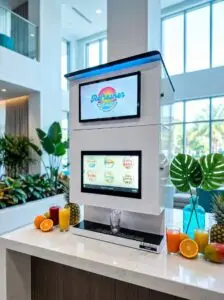
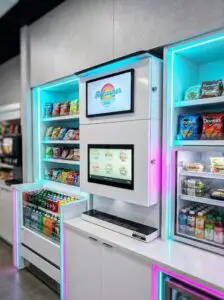
Common placement points include the service bar or well station, a self-serve beverage counter for tea, lemonade, and soft drinks, and expo or back-of-house stations that support high-volume drink orders during a rush. Full-service, fast-casual, and QSR concepts each have a different fit depending on menu complexity and service model.
Menu fit for restaurant beverage programs
Restaurants commonly run recipe-driven categories well suited to automation: cocktails and mocktails, iced coffee and tea, refreshers, lemonades, and dirty sodas. These are typically built from BIB syrups and bulk liquid bases and are a natural fit because they don’t usually involve dairy or heat. Dairy, other perishables, and high-viscosity ingredients raise separate food-safety and cleaning questions that should be confirmed with TendedBar before adding them to a menu.
Staffing and ticket-time considerations
In a back-of-house or service-well deployment, the goal usually isn’t replacing a bartender outright, it’s removing repetitive pours from a server or bartender’s workload so they can handle more tables or seats. A single well-configured system can generate the throughput that would otherwise take additional staff hours to match during peak service, which is a useful directional input for planning, though the actual labor impact depends on how your kitchen and floor are staffed.
Space and installation considerations
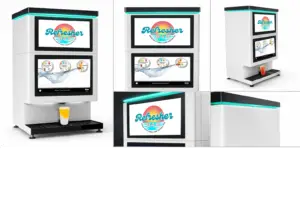
The countertop configuration runs roughly 30 in W x 25.5 in D and draws on a standard 20-amp, 110V circuit in most applications, which fits most service-well and back-of-house footprints without a major renovation. Confirm exact utility requirements, including any water, drainage, or ventilation needs for your specific configuration, with a licensed contractor before committing to a location.
Service mode fit for restaurant operations
Most restaurant back-of-house deployments run in back-of-house or attended mode, since a staff member is typically nearby to manage the ticket flow and any age verification for alcohol. Self-serve, guest-facing deployments (a non-alcoholic beverage counter, for example) can run semi-attended or unattended depending on your concept and local regulations.
Questions to work through before installing in a restaurant
- Where in your kitchen or service-well workflow is drink-building creating the most bottleneck?
- Which menu items are BIB- or bulk-input friendly, and which need separate confirmation (dairy, high-viscosity, or heat-based drinks)?
- What service mode fits your concept, staffed back-of-house or guest-facing self-serve?
- What’s your restocking and cleaning plan during service hours?
- Do you need POS integration for guest-facing deployments, and what’s currently supported for your POS platform?
Frequently Asked Questions
Can a restaurant use automation to speed up bartender workflow without replacing staff?
Yes, a common use case is placing a countertop unit in the service well or back-of-house to handle repetitive drink builds, freeing bartenders and servers to focus on guest-facing work rather than removing staff outright.
What drinks can a restaurant automate with a countertop system?
Cocktails, mocktails, iced coffee, iced tea, refreshers, lemonades, and dirty sodas are common fits since they’re typically built from BIB syrups and bulk liquid bases. Dairy and high-viscosity ingredients need separate confirmation before adding them to a menu.
Does a back-of-house unit need to be self-serve for guests?
No. Back-of-house deployments are typically staff-operated, used to speed up drink production for tickets rather than as a guest-facing self-serve station, though both models are supported depending on your concept.
How much space does a service-well installation need?
The countertop configuration measures roughly 30 in W x 25.5 in D on a standard 20-amp, 110V circuit in most applications. Confirm exact utility requirements for your specific kitchen or bar layout with a licensed contractor.