Short answer: crew-serve configurations let staff run multiple concurrent pours during high-volume concession rushes
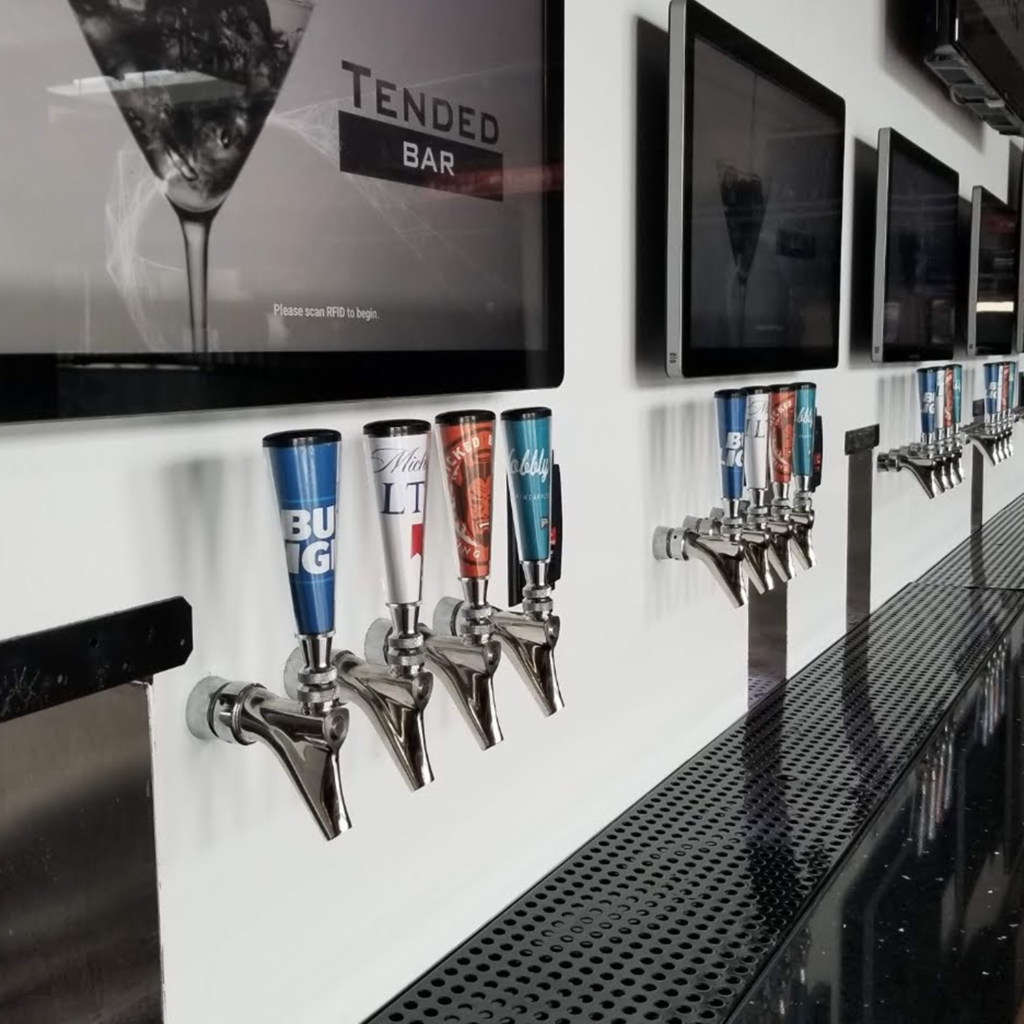
High-volume concessions need throughput that a single manual station can’t match during a rush. TendedBar’s four-station configuration serves four patrons simultaneously in a 10-foot footprint, a level of simultaneous service four bartenders couldn’t physically match side by side, with an observed peak throughput of up to 35 drinks in five minutes per unit during high-volume periods.
What crew-serve means for concessions
Crew-serve describes a staffed station where one or more team members operate multiple concurrent dispensing points rather than each staff member running a single manual pour. The four-station configuration (120 in W x 45 in D, dedicated 120V/20A circuit or 208V power) is built for exactly this kind of concentrated, staffed throughput.
Matching configuration to concession volume
A countertop unit, pouring in as little as 5 seconds per drink, can work for smaller concession points or secondary stands. For high-traffic concession stands facing concentrated rushes, the four-station configuration supports higher concurrent throughput, with an average pour time of 6 to 9 seconds per drink. That throughput figure reflects observed peak demand across multiple locations, not a guarantee at every venue, and shouldn’t be combined with the countertop unit’s separate pour-time figure.
Space and installation for crew-serve stands
Concession stand footprints are often built around existing counter and queue layouts, so knowing your configuration’s exact dimensions matters early in planning. The four-station unit measures 120 in W x 45 in D. Confirm exact utility routing, including power and any water or drainage needs, with your facilities team before finalizing placement.
Staffing a crew-serve station
A crew-serve stand still requires staff to manage cups, garnishes, payment, and any restocking, but a four-station unit lets a smaller crew generate throughput that would otherwise require a much larger staff working the same window, a useful directional input though your actual staffing plan should account for your specific volume and layout.
Questions to work through before installing a crew-serve system
- Does your concession stand need countertop or four-station throughput, or a mix across locations?
- What’s your peak-rush pattern, and how does current staffing handle it?
- What utility access exists at your planned stand location?
- Who manages restocking and monitoring across your number of units?
Frequently Asked Questions
How much throughput can a crew-serve station handle?
The four-station configuration has an observed peak throughput of up to 35 drinks in five minutes per unit during high-volume periods, with an average pour time of 6 to 9 seconds per drink. This is measured per unit, not per individual station.
How much space does a crew-serve station need?
The four-station configuration measures 120 in W x 45 in D and runs on a dedicated 120V/20A circuit or 208V power depending on cold-plate versus chiller setup.
Does crew-serve automation reduce staffing needs?
A four-station unit serving four patrons at once in a 10-foot footprint represents a level of simultaneous service four bartenders couldn’t physically match side by side, which can help a smaller crew handle a concentrated rush.
Can a venue mix countertop and four-station configurations?
Yes, smaller concession points may use a countertop unit while high-traffic stands use the four-station configuration. Confirm which fits each location with your venue’s traffic patterns in mind.