Short answer: back-of-house cocktail automation speeds up ticket-driven cocktail service without adding bar staff
Restaurants running cocktail programs from a back-of-house station face the same ticket-time pressure as any kitchen line. A countertop automated system pours a cocktail in as little as 5 seconds under standard conditions, supporting recipe-driven builds from up to 16 BIB and 10 bulk ingredient inputs, which can help keep cocktail tickets from becoming the bottleneck during a rush.
Where back-of-house cocktail automation fits
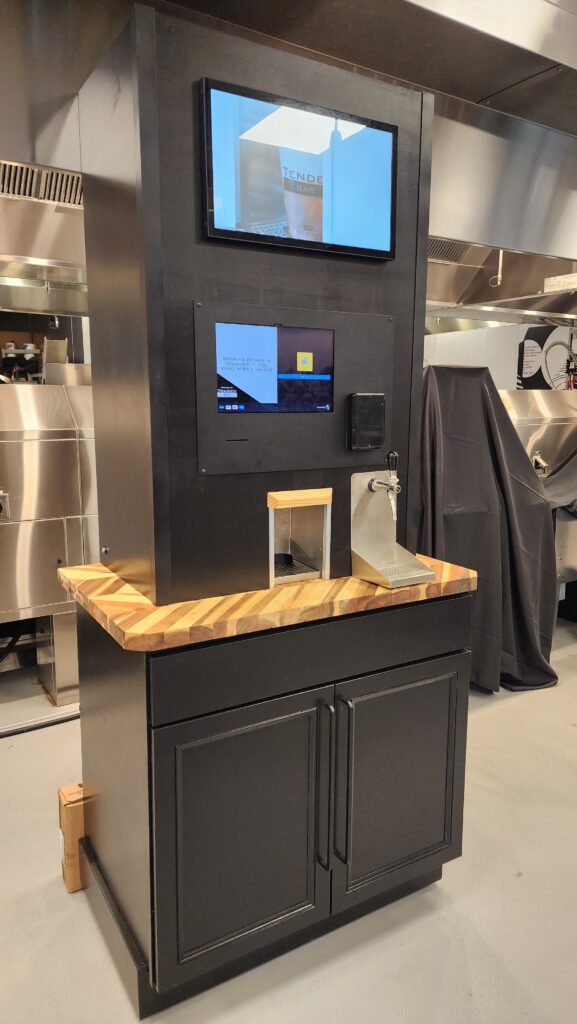
Common placement points include a service bar station that feeds the dining room, a satellite bar near a private event space, or an expo-adjacent station that keeps cocktail tickets moving alongside food tickets. Because the station doesn’t need to face guests directly, layout can prioritize speed and workflow over presentation.
Menu fit for a back-of-house program
Recipe-driven cocktails built from BIB syrups, bulk bases, and spirits are a natural fit for back-of-house automation. Spirit dispensing is supported and typically falls under the same regulatory classification as a margarita machine, so back-of-house use is rarely an issue unless your local jurisdiction has specific guidelines restricting automated liquor dispensing, worth confirming with your local licensing authority before finalizing a menu.
Speed and consistency under ticket pressure
A back-of-house cocktail station lives or dies on ticket time just like the kitchen line. Automated recipe execution removes the manual measuring variance that can slow down or inconsistent-ify a hand-built cocktail during a rush, helping hold both speed and quality steady across a shift.
Space and installation for a back-of-house station
The countertop configuration measures roughly 30 in W x 25.5 in D and draws on a standard 20-amp, 110V circuit in most applications, which generally fits within an existing service bar or expo-station footprint. Confirm exact utility requirements with a licensed electrician before finalizing placement, especially in tight back-of-house layouts.
Staffing considerations for cocktail-heavy tickets
Restaurants with cocktail-heavy menus often need a dedicated bartender just to keep pace with ticket flow. A single well-configured back-of-house system can generate throughput that would otherwise take additional staff hours to match during a rush, a useful directional input, though your actual staffing plan depends on your specific ticket volume and menu.
Questions to work through before installing back-of-house automation
- Does your cocktail menu include spirits, and does your jurisdiction have any guidelines restricting automated liquor dispensing? It’s typically classified similarly to a margarita machine.
- Where does cocktail ticket time currently bottleneck your kitchen or bar workflow?
- What’s your existing service-bar or expo-station footprint and utility access?
- How many distinct cocktails need to be on the menu, and how often does that menu change?
Frequently Asked Questions
Can a back-of-house system dispense cocktails with spirits?
Yes, spirit dispensing is supported for back-of-house use. It typically falls under the same regulatory classification as a margarita machine, so it’s rarely an issue unless your local jurisdiction restricts automated liquor dispensing specifically.
How fast can a back-of-house station pour a cocktail?
The countertop configuration pours a drink in as little as 5 seconds under standard conditions.
How much space does a back-of-house cocktail station need?
The countertop configuration measures roughly 30 in W x 25.5 in D on a standard 20-amp, 110V circuit in most applications.
Does automation reduce the need for a dedicated bartender?
A single well-configured system can generate throughput that would otherwise take additional staff hours to match during a rush, though the actual labor impact depends on your specific ticket volume and menu.