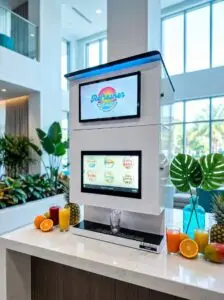
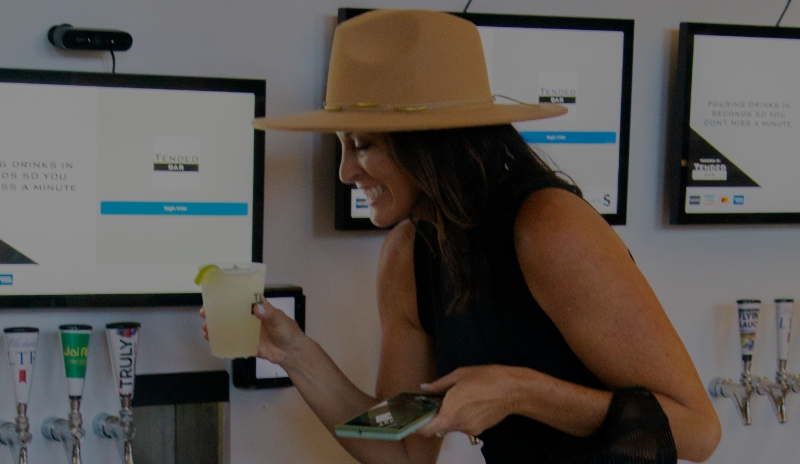
Cocktail hour is the worst-case scenario for a wedding bar. Nearly every guest wants a drink in the same twenty minutes, then demand drops off for the rest of the night. Staff a bar big enough to handle that rush, and you’re paying for capacity that sits mostly idle once dinner starts. That’s the specific problem a countertop drink station tends to solve well: it doesn’t get overwhelmed by a rush, because it isn’t working any harder at minute one than at minute twenty.
What actually gets poured
Most events run a mix, house cocktails, wine, beer, and a non-alcoholic lineup (lemonades, refreshers, coffee) that can run self-serve. Couples who want a signature cocktail can have it programmed once and know it’ll taste the same for their first guest and their two-hundredth, which isn’t something a rushed bartender during a cocktail-hour crush can always promise.
Staffing still matters, just less of it
Non-alcoholic drinks can typically run unattended. Alcohol can’t, someone still needs to be checking IDs, so most events keep at least one staff member near the station during service. It’s a smaller ask than staffing a full second bar, and it’s worked out with the venue based on local rules rather than a one-size answer.
It’s an add-on, not a replacement
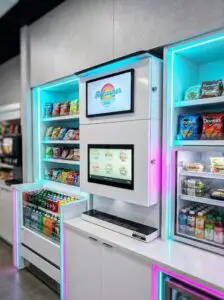
In practice, most venues use this alongside their existing bar program rather than instead of it, adding a station at a cocktail-hour patio, a lounge, or a late-night snack corner where a second full bar wouldn’t be worth building out. The main bar still runs the way it always has.
Fitting it into a one-day event
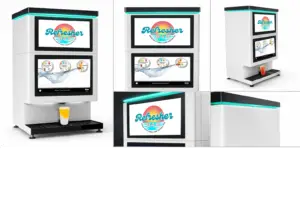
A tent, a reception hall, or a hotel ballroom usually has enough room and power for a countertop unit without any special buildout, though it’s worth confirming power access with the venue ahead of time, especially for an outdoor tent setup. TendedBar works through placement and power specifics with the venue or planner directly.