Here’s a scenario that comes up a lot: a venue runs a bar with three bartenders on a Friday night shift, six hours each, and wants to know if an automated unit would actually save money or just move the cost around. The only way to answer that honestly is to run the numbers side by side.
The traditional shift, priced out
Three bartenders at $18/hour plus tips support, six-hour shift, comes to roughly $324 in direct wages before payroll tax and benefits load, which typically adds another 15-20%. Call it $380-390 fully loaded for one Friday shift. Multiply that across a full week of service and a venue easily clears $2,000-2,500 a week just in bartender wages for one bar station.
What the automated version actually costs to run
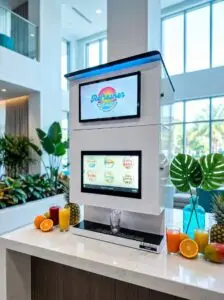
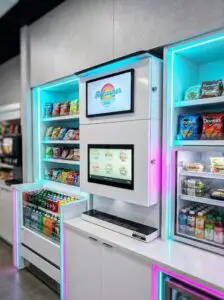
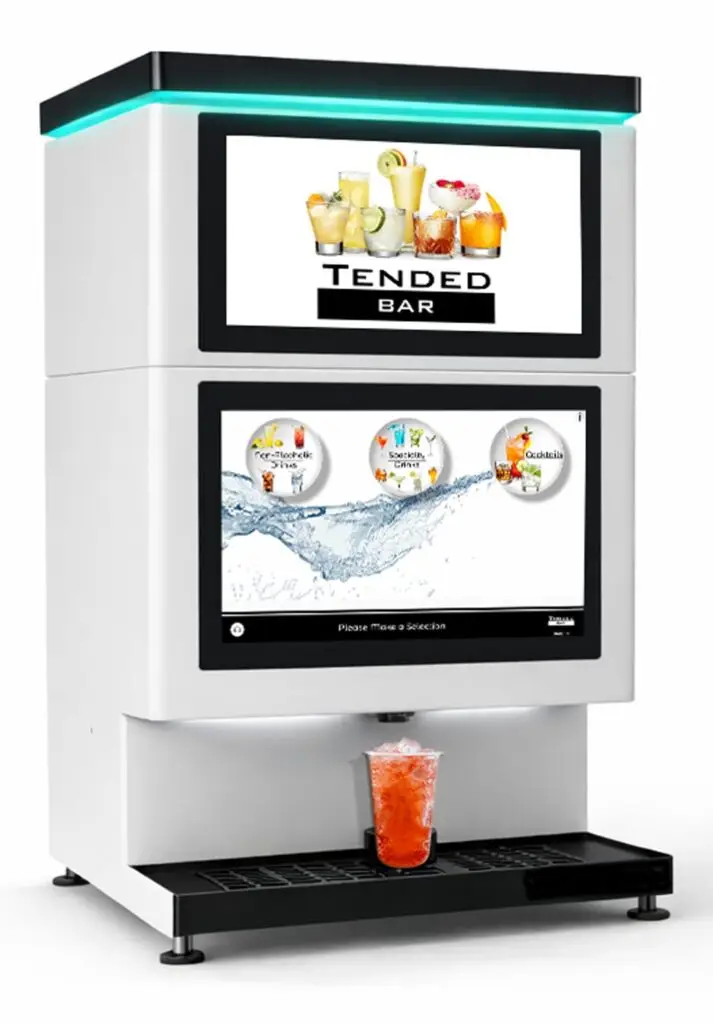
Swapping in an automated bar doesn’t mean zero staff. Most venues keep one attendant on duty to restock BIB bags, handle cash or card issues, and manage the handful of guests who need help. That’s one wage instead of three. Using the same $18/hour rate, one attendant for the same six-hour shift is $108 in direct wages, roughly a third of the original cost.
Where the payback period comes from
The unit itself isn’t free, and that’s the number people skip. Depending on configuration (BIB count, bulk inputs, screen setup), an automated bar is a real capital expense, not a subscription. Venues typically get to payback by comparing the weekly payroll savings ($1,300-1,700 in the example above) against the equipment cost, and most land somewhere between 6 and 14 months depending on how many nights a week the bar actually runs. A venue open five nights a week pays it back faster than one open two.
The savings that don’t show up on a payroll report
Pour consistency cuts liquor cost, since a programmed recipe doesn’t over-pour the way a busy bartender under pressure sometimes will. Fewer walkouts because the line moves faster is real but harder to put a number on. Neither of these is guaranteed, but venues that track cost-per-pour before and after tend to see it show up in the margin, not just the payroll line.
Where the math falls apart
This doesn’t work for every venue. A slow bar that only needs one bartender to begin with won’t see the same swing, since there’s no second or third wage to eliminate. And a bar built around craft cocktails and bartender showmanship is selling something an automated unit can’t replicate, so the comparison isn’t really staffing cost at that point, it’s product. Run your own numbers before assuming the ratio holds: current bartender headcount and wage, nights per week the bar runs, and what a comparable automated setup costs installed are the three inputs that decide whether this pencils out for a specific venue.